
Introduction
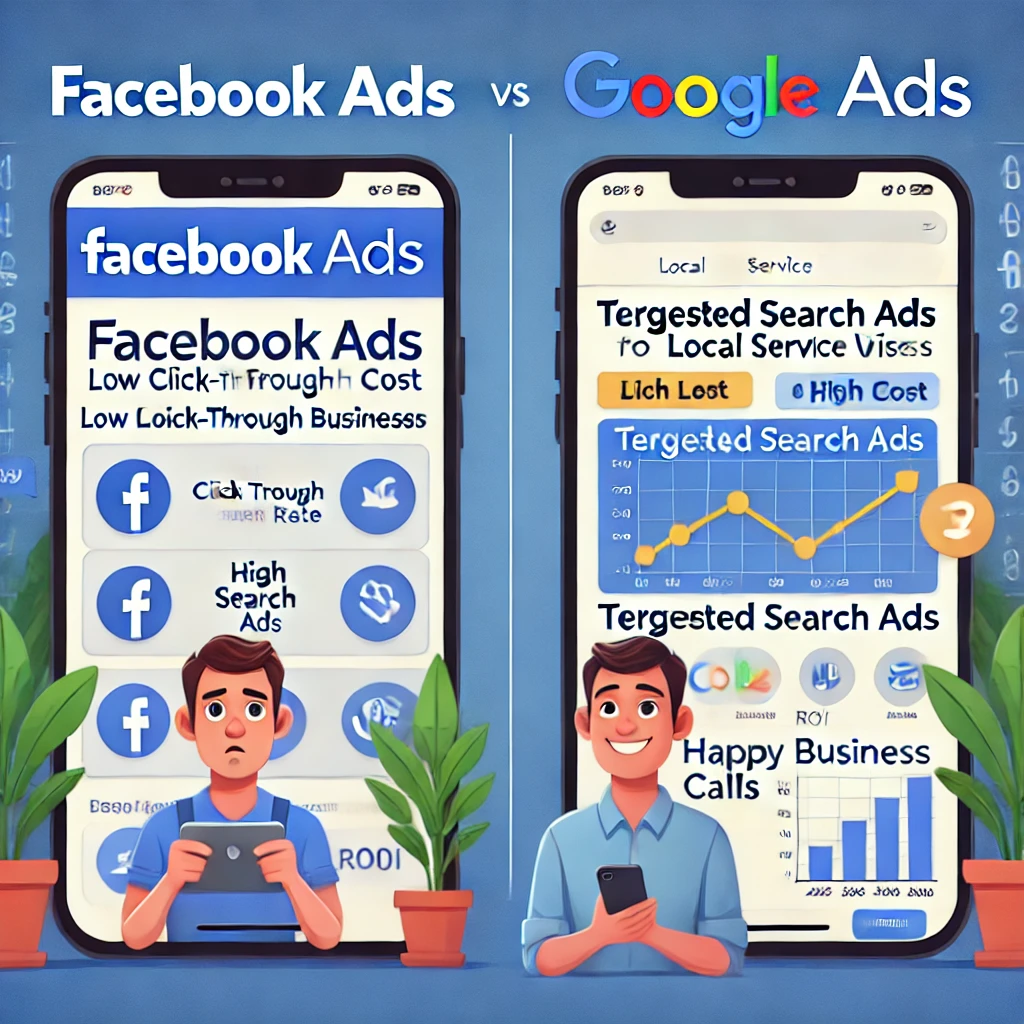
Local service businesses need one thing from online ads: results. But not all platforms deliver the same return. Many small business owners turn to Facebook ads, drawn by the platform’s reach. However, only about 3% of users click on local service ads there. That’s low.
Google Ads, on the other hand, often provide five times more leads at half the cost. This article explains why that happens, and why Google Ads should be the go-to for local businesses looking to grow fast without wasting budget.
1. Intent: Google Users Are Already Searching
When someone needs a plumber, roofer, or home renovation expert, they don’t open Facebook. They open Google. They type in exactly what they need. These are high-intent users. They already want the service — they just need to find the right provider.
With Google Ads, your business appears at the top of search results when someone types those key phrases. You’re not interrupting their scroll. You’re showing up at the exact time they want help. That intent makes all the difference.
Facebook ads, in contrast, rely on interruption-based marketing. Users aren’t on Facebook to hire a contractor or book a service. They’re there to scroll, browse, and socialize. Ads feel like noise, not help — which explains the low click rate.
2. Budget Control Is Simpler and Safer
Google Ads offers daily budget caps. You decide exactly how much you want to spend per day, and once it hits that amount, the ads stop for the day. No surprises, no sudden spikes.
Facebook Ads can be trickier. Budgeting is often less transparent, and performance can vary widely from one day to the next. You might get decent results some days, and nothing the next — all while spending the same amount.
Local businesses typically work with tighter budgets. Google’s clearer budgeting model makes it easier to test, adjust, and scale gradually.
3. Google Ads Bring Results Fast
Local businesses can’t afford to wait months for traction. They need calls, form fills, and messages quickly. Google Ads often start delivering leads within 24 to 48 hours after launch.
Why? Because they tap directly into existing demand. You’re not trying to build awareness — you’re simply placing your business in front of people already searching for your services.
Facebook requires more time and nurturing. Since users aren’t actively looking, you have to rely on retargeting, content engagement, and long-term brand recall. That’s a tough game for service providers who need quick wins.
4. You Get Clear Data and Feedback
Google Ads provide straightforward data. You see which keywords triggered your ad, which ads led to clicks, and which clicks turned into leads. This makes it easy to optimize — fast.
You can track calls, form submissions, and even which ad variations perform best. Over time, this helps you improve performance and reduce wasted spend.
Facebook’s data is less direct. Attribution can be murky. Clicks and impressions may look good, but they don’t always translate into calls or conversions — especially for local services. This can make optimization harder and more expensive over time.
5. Google Ads Align With Local Search Behavior
When people search for services, they often include local keywords: “kitchen remodeler near me” or “best HVAC company in Dallas.” Google Ads lets you target these exact search phrases and even restrict your ads by geographic location.
That means your ad money is only spent on people in your service area — not random users across the state or country.
Facebook allows location targeting too, but it’s broader and less precise when it comes to actual service need. A person might live in your target zip code, but that doesn’t mean they’re looking for your service right now. That mismatch costs money.
6. Higher ROI Over Time
Over weeks and months, Google Ads get smarter. As you gather more data, you can focus spend on only the highest-performing keywords and time slots. Your cost per lead drops, and your conversion rate improves.
Local service businesses that stick with Google Ads often find themselves paying less per lead while getting more calls. That’s the ideal scenario — more business without raising ad spend.
Facebook Ads often require constant creative refreshes. Audiences tire quickly of seeing the same ad. And without strong intent, even a clever ad might get ignored. That leads to higher costs and inconsistent ROI.
7. Real-World Case Study: Home Renovation Company
A home renovation business spent months running Facebook ads. The results? Few clicks, high costs, and little to show. After switching to Google Ads, everything changed.
- Lead volume increased by 5x
- Cost per lead dropped by 50%
- Calls came in within 24 hours of launching
Same services. Same city. Different platform — completely different results.
That’s not a one-off story. Many local service providers report similar outcomes when they make the switch.
8. Summary: Google Ads Beat Facebook for Local Services
Let’s review what makes Google Ads more effective:
- ✅ Search intent: You reach people who already want your service.
- ✅ Budget control: Set daily limits and scale with confidence.
- ✅ Fast results: Leads can come in within 1–2 days.
- ✅ Better data: See what works and improve quickly.
- ✅ Local targeting: Show up for relevant searches in your area.
- ✅ Higher ROI: More leads for less over time.
For local service businesses, every marketing dollar counts. Google Ads ensures that money works smarter — not harder.
Need Help Getting Started?
If you’re not sure how to set up or optimize Google Ads, that’s okay. It’s easy to get overwhelmed. But getting it right can transform your business.
Want help? Contact us here — we love to show you how to make Google Ads work for your business.


0 Comments